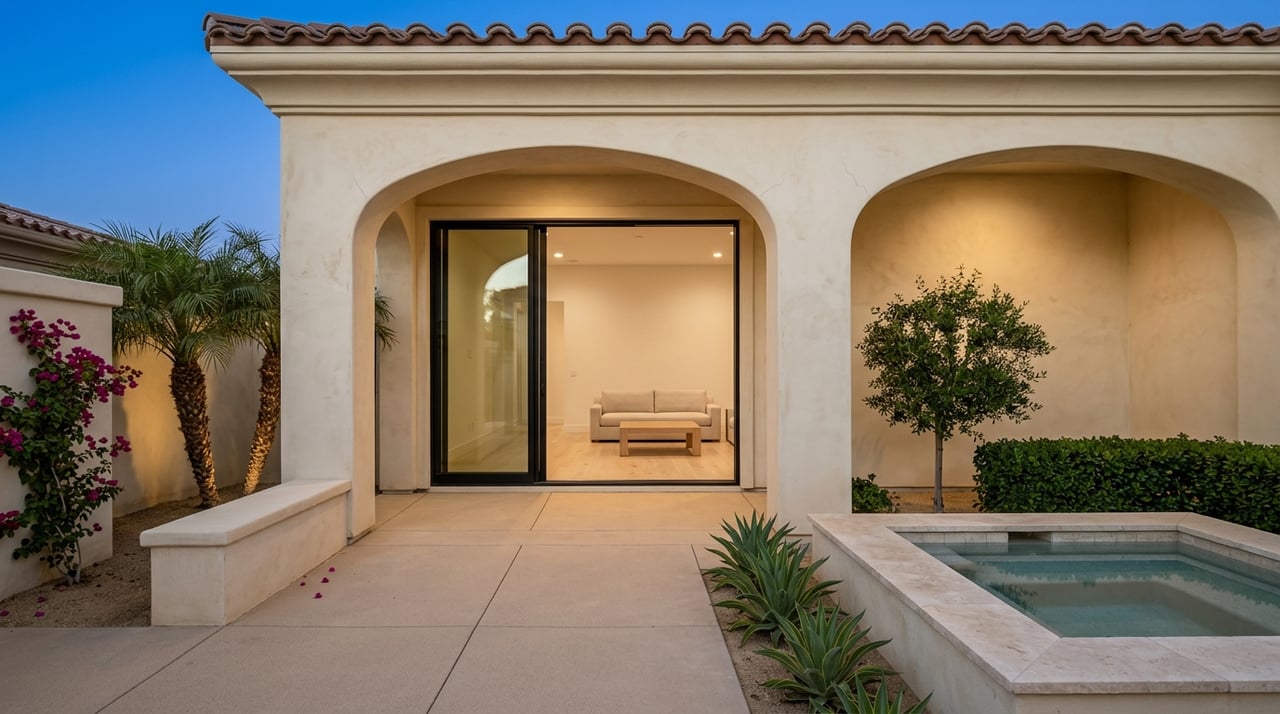
PGA West Short-Term Rentals: Rules, Returns & Key Risks
April 2, 2026
April 2, 2026
Thinking about buying in PGA West and using the home as a short-term rental? That idea can look simple on paper, but in La Quinta, the rules are layered, address-specific, and closely tied to both city and HOA requirements. If you are weighing income potential against the realities of ownership, this guide will help you understand the key rules, likely return patterns, and biggest risks before you make a move. Let’s dive in.
PGA WEST is a large master-planned community in La Quinta with multiple associations and nearly 3,188 homes and lots across 2,200 acres. According to the PGA WEST Master Association, the community includes the Master Association, three residential HOAs, and The Club at PGA WEST, and owners must follow local, county, state, and federal rules.
That matters because short-term rental eligibility is not determined by the PGA West name alone. The City of La Quinta short-term vacation rental page states that new General and Primary STVR permits are currently banned in non-exempt areas, while new permits may still be available for homeshare uses and certain lots of 25,000 square feet or more.
The city’s exempt-area list specifically names Signature at PGA West, also called Haciendas. The broader PGA WEST community is not broadly listed as exempt, so if you are underwriting rental income, you need to verify the exact address and sub-association before assuming a property can operate as an STR.
If you are evaluating a purchase for rental use, the first question is simple: Is this specific address eligible? That should come before reviewing projected rents, furnishing costs, or management options.
The city directs owners to verify address eligibility first, then apply for the proper permit and business license if the property qualifies. This step is critical because one PGA West property may be eligible under a mitigated category or exempt area, while another nearby property may not be eligible for a new permit at all.
For buyers, this is the biggest underwriting risk. If you assume STR income and later learn the address does not qualify, your whole purchase model can change.
Inside PGA West, the Master Association requires annual rental registration for every rental property before any rental activity or advertising begins. The current registration fee is $250, and for short-term vacation rentals, the owner must also provide a current City of La Quinta business license and STVR permit before registration is considered complete, according to the PGA WEST rental property requirements.
The city also has its own process. On the La Quinta STVR forms page, permit categories include Homeshare, Primary, and General, along with a General mitigated category for certain projects, including Signature at PGA West.
This is important because permit type affects both eligibility and operating structure. Homeshare permits are for owner-occupied stays, which means the owner must remain on-site throughout the visitor’s stay.
If you plan to operate legally, your checklist likely includes:
The city’s monthly TOT reporting form states that reports are due no later than 30 days after the end of each reporting month, even if the property had no rental activity.
Owning an STR in PGA West is not just about getting the permit. You also need a day-to-day operating plan that fits city rules and community rules.
La Quinta’s STVR code sets bedroom-based occupancy limits and requires a 24-hour local contact who can respond within 30 minutes. The city’s published code excerpt also says the owner or agent must make sure guests follow occupancy, noise, and conduct rules, and the city may inspect or count occupants in response to a complaint.
Based on the city’s published code excerpt, overnight occupancy caps include:
These limits affect both marketing and revenue expectations. If you are buying a home because you think it can host large groups during event season, make sure your assumptions match the city’s actual occupancy rules.
According to the city code excerpt, sound-producing devices may not be used outside, or be audible from outside, between 10:00 p.m. and 7:00 a.m. The city manager may also impose added site-specific conditions, including time-stamped noise monitoring, when needed.
Parking rules matter too. The city requires on-site parking in approved driveway, garage, and or carport areas, and the PGA WEST Combined Community Rules require garage space to be used to full capacity before street parking is allowed, with no more than two vehicles per dwelling unit parked on the street between midnight and 7:00 a.m.
The PGA WEST Combined Community Rules make the homeowner responsible for tenants, guests, management companies, cleaners, and other invitees. The rules also require a valid city permit on file for rentals of 30 days or less and a 30-minute response time to complaints while the dwelling is rented.
That means your management plan matters almost as much as the property itself. A great-looking home can still become a poor rental asset if the guest screening, parking control, and response process are weak.
If you are buying with rental income in mind, marketing language matters. The PGA WEST Combined Community Rules state that the golf course is private property and that non-member residents, guests, or tenants do not automatically have the right to enter golf course property, including cart paths.
In plain terms, you should not assume that renting a home in PGA West means automatic golf access or club privileges. From a buyer perspective, this is important because features that seem implied by location may not actually transfer to guests.
There is no official public occupancy dashboard for PGA West specifically in the materials provided, so the best available proxy is regional vacation rental data for professionally managed homes across the Coachella Valley. According to Visit Greater Palm Springs vacation rental data, occupancy is strongly seasonal.
Recent reported figures show:
The broad takeaway is clear. Revenue in this market is likely to be driven by season, events, and property positioning rather than stable year-round occupancy.
If you are buying for investment purposes, it is smart to stress-test your numbers. A realistic model should account for:
The same regional reporting source noted that 2024 finished about 2% lower in occupancy and about 4% lower in ADR than 2023, while January 2025 started about 7% higher in occupancy and 8% higher in ADR than January 2024, based on regional market reporting from Visit Greater Palm Springs. That kind of movement is another reminder that past peak months should not be treated as a guaranteed baseline.
For most buyers, the largest risk is eligibility. The city’s rules are address-specific, and the current exemption structure is narrow. Before you rely on STR income to justify a purchase price, confirm the property’s status directly with the city.
The second major risk is compliance. La Quinta encourages residents to report active violations such as noise, parties, safety concerns, and overoccupancy through its STVR hotline and code compliance channels, according to the city’s code compliance resources. Within PGA West, the HOA can also cite or fine owners for violations tied to tenants and guests.
The third risk is operational mismatch. A home may be legally rentable but still perform poorly if the layout, parking, occupancy cap, or management setup does not support a smooth guest experience.
If you are serious about buying in PGA West for part-time personal use and part-time rental income, treat the property like a small regulated lodging business. That means evaluating legal eligibility, permit category, HOA requirements, parking, occupancy limits, and seasonal revenue potential together, not one at a time.
This is where local, address-level guidance can save you from expensive assumptions. A property that looks promising online may have very different value depending on its permit path, sub-association, and operating constraints.
If you want help evaluating a specific PGA West address, comparing sub-communities, or pressure-testing the numbers before you buy, connect with Levi Knapp. You will get clear local insight, a concierge-level approach, and practical guidance built around how you actually plan to use the property.
Stay up to date on the latest real estate trends.

Whether buying your first desert retreat or selling a signature property, Levi Knapp delivers a seamless and sophisticated experience every step of the way.