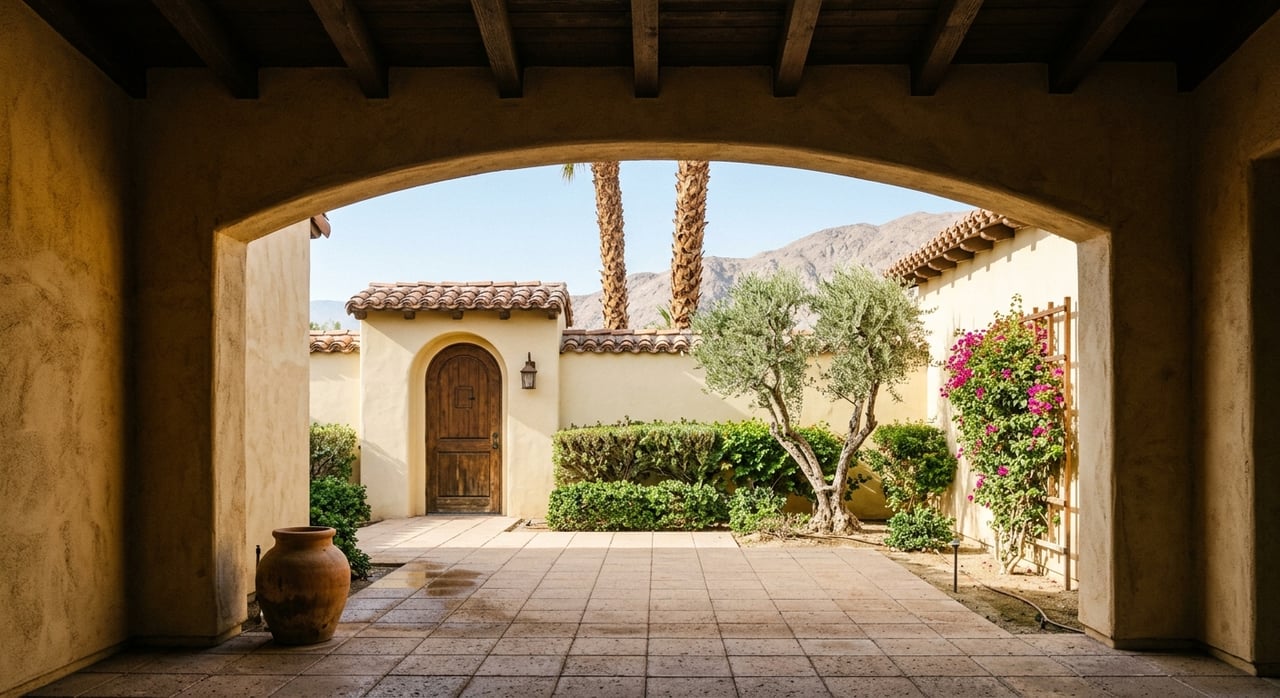
Guide to Moving from San Diego to Palm Springs
April 23, 2026
April 23, 2026
Thinking about trading coastal breezes for mountain views and desert sunshine? If you are considering a move from San Diego to Palm Springs, the shift can feel exciting, but it also comes with real lifestyle differences. The good news is that with the right expectations, you can compare costs, neighborhoods, home styles, and daily living in a much clearer way. Let’s dive in.
If you are moving from San Diego, Palm Springs will likely feel like a lifestyle move more than a simple change of address. The two markets offer very different day-to-day experiences, especially when it comes to climate, housing, and pace.
Palm Springs is a desert city, not a coastal one. According to NOAA climate normals, Palm Springs has an annual mean temperature of 75.6°F and receives 4.61 inches of precipitation, while San Diego averages 64.7°F and 9.79 inches. That difference becomes especially noticeable in summer.
In June, Palm Springs averages 103.6°F for highs, and in July it averages 108.6°F. By comparison, San Diego averages 71.7°F in June and 75.3°F in July. If you are used to San Diego weather, Palm Springs living often means planning more around shade, air conditioning, pools, and early or evening outdoor time.
For many buyers and renters, this is the first question. In general, yes, Palm Springs is less expensive than San Diego for housing, though it is still costly by national standards.
Zillow data for Palm Springs shows an average home value of $624,876 as of March 31, 2026. San Diego’s average home value is listed at $1,001,265. That puts Palm Springs about 37.6% lower on average.
Rent follows a similar pattern. Zillow reports average rent at $2,095 in Palm Springs versus $2,911 in San Diego, or about 28.0% lower in Palm Springs. U.S. Census QuickFacts also supports the gap, showing a median owner-occupied home value of $604,000 in Palm Springs compared with $906,700 in San Diego, and median gross rent of $1,562 versus $2,313.
That said, lower housing costs do not always mean lower overall financial pressure for everyone. Census data shows median household income is $73,119 in Palm Springs compared with $108,077 in San Diego, so it helps to look at your personal budget and goals, not just headline prices.
Palm Springs has a different ownership profile than San Diego, and that shapes the market in important ways. Census QuickFacts shows the city has a 65.9% owner-occupied rate compared with 47.3% in San Diego.
The city also has a larger share of seasonal or part-time occupancy. Census figures note an estimated 30.5% of units were vacant, and the city has smaller households on average, at 1.8 persons per household. Combined with a population where 35.3% of residents are age 65 or older, Palm Springs often attracts second-home buyers, retirees, and seasonal residents in addition to full-time locals.
For you, that can mean a market with more variation in how homes are used. Some properties are primary residences, some are lock-and-leave second homes, and some are part-time retreats. That is one reason a neighborhood-by-neighborhood search matters so much here.
Palm Springs is not a one-price, one-style market. Neighborhood-level pricing varies sharply, so your search should usually start with location and home style before you narrow by square footage alone.
According to Zillow’s Palm Springs market page, estimated neighborhood values range from about $469,915 in Canyon Corridor and $635,283 in Warm Sands to roughly $1.49 million in Historic Tennis Club, $1.79 million in The Mesa, and $2.22 million in Andreas Hills. That is a wide spread for one city.
The City of Palm Springs notes that it has 26 unique neighborhoods, and local spotlights often highlight areas such as Vista Las Palmas, Racquet Club West, The Mesa, Movie Colony East, Warm Sands, Indian Canyons, Deepwell, and Tahquitz River Estates. Each one offers a different mix of setting, architecture, and price point.
If you are coming from San Diego, one adjustment is how often Palm Springs buyers shop by design and neighborhood character. In some markets, the search starts with bedroom count and lot size. Here, architecture often plays a larger role.
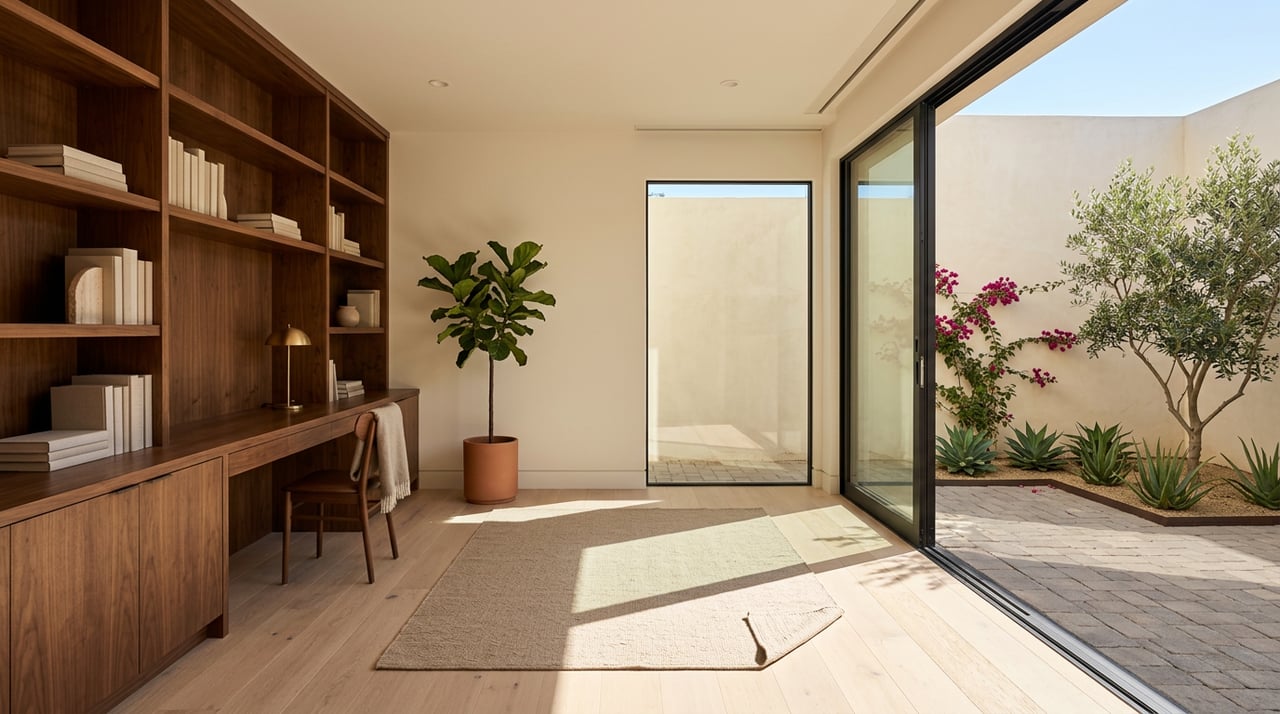
The city describes The Mesa as a strictly residential neighborhood with about 180 homes and a mix of Spanish-style, adobe, California Ranch, midcentury modern, contemporary, and Streamline Moderne properties. That range helps explain why buyers often focus on the feel of a neighborhood as much as the floor plan.
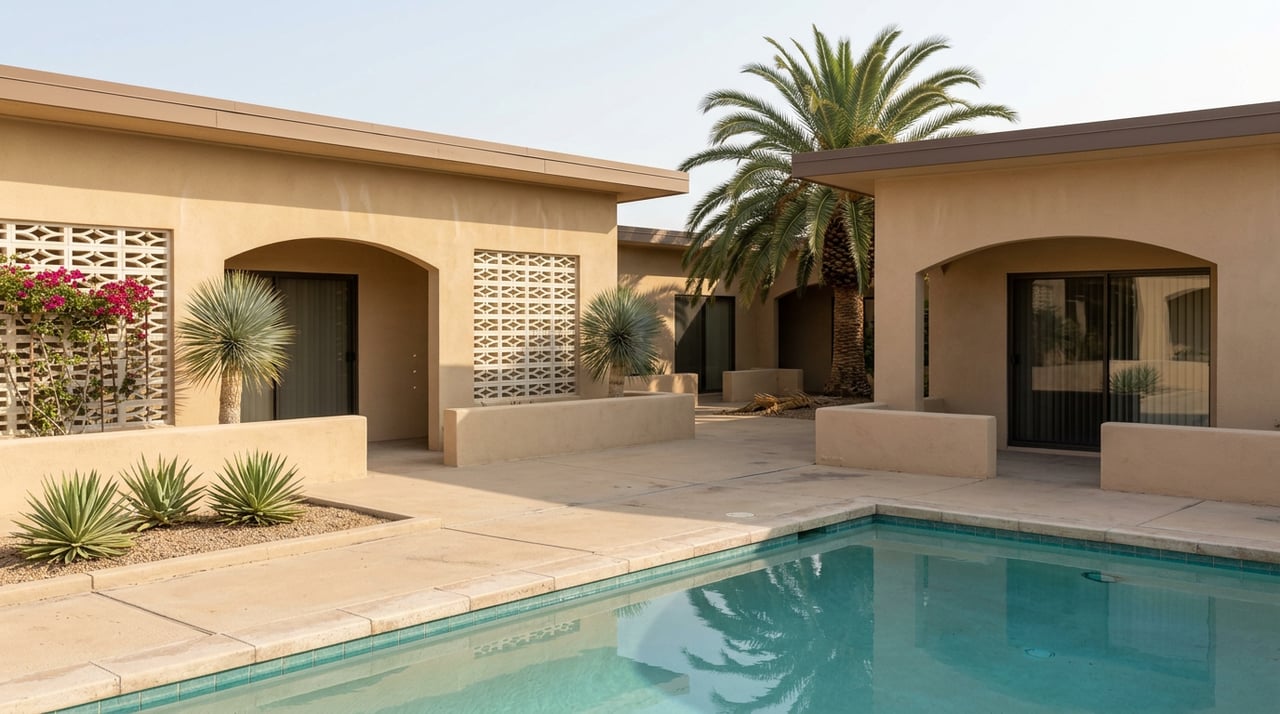
If midcentury design is part of your vision, Palm Springs has deep roots there. Visit Greater Palm Springs highlights the area’s midcentury modern architecture, Modernism Week, and design identity as major parts of local culture.
Palm Springs offers more than one lane for buyers. The city’s land-use framework allows a broad mix of housing types, including single-family attached and detached homes, patio homes, duplexes, townhomes, multiple-family housing, and mobile home projects, according to the City of Palm Springs land use information.
That gives you room to match your purchase to your goals. If you want a lower-maintenance second home, a condo or townhome may be worth comparing first. If you want privacy, architecture, or a pool-centered property, single-family neighborhoods may rise to the top.
A simple way to start is to compare:
This is one of the most important reality checks. Palm Springs is close enough for regular visits, but it is not a practical daily commute to San Diego.
The City of San Diego driving-distance map lists Palm Springs at 139 miles and about 2.5 hours by car from San Diego International Airport, with travel times varying by time of day. That makes weekend trips realistic, but daily back-and-forth driving would be a major lift.
For most people, moving from San Diego to Palm Springs works best when you are embracing a new routine. It makes sense for remote work, retirement, a second-home lifestyle, or a primary residence centered in the Coachella Valley, not as a commute play.
Even though Palm Springs is smaller, it still offers meaningful air access. The research report notes Palm Springs International Airport served more than 3.2 million passengers in 2024, while San Diego International served 25.24 million.
That makes Palm Springs International a smaller regional airport, but still a useful one for many buyers, especially seasonal owners and second-home purchasers. If you plan to split time between homes or host visiting family and friends, this can be a practical advantage.
If rental flexibility matters to you, this is an area where details matter. The city states that vacation rentals and homesharing are only allowed as ancillary uses of residential property and are limited to single-family dwelling units, not apartments, under the city’s land use policy.
In plain terms, you should not assume every property can be used the same way. Parcel-specific rules, city regulations, and HOA restrictions can all affect what is possible. If a property needs to serve as both a retreat and an income-producing asset, this deserves careful review before you buy.
Maybe. If you like the desert lifestyle but want more options, it helps to think in terms of the broader region.
Visit Greater Palm Springs describes Greater Palm Springs as a nine-city region. That means your search can also include nearby resort cities such as Rancho Mirage, Palm Desert, Indian Wells, and La Quinta if your goals extend beyond Palm Springs city limits.
For some buyers, Palm Springs itself is the right fit because of its architecture, neighborhood identity, and close-in feel. For others, nearby communities may offer a better match for golf access, newer housing, or a different budget range.
If you are considering a move from San Diego to Palm Springs, the best question may not be whether Palm Springs is better. It is whether it fits the life you want next.
Palm Springs can offer lower housing costs than San Diego, a strong design identity, a resort-style rhythm, and easier access to second-home or seasonal living. At the same time, the heat is real, the market is highly neighborhood-driven, and the distance makes it a separate lifestyle base rather than an extension of San Diego.
If you want help comparing neighborhoods, home styles, or second-home options across Palm Springs and the surrounding desert cities, Levi Knapp offers concierge-level guidance with local market insight and on-the-ground support for buyers making the move from a distance.
Stay up to date on the latest real estate trends.
Whether buying your first desert retreat or selling a signature property, Levi Knapp delivers a seamless and sophisticated experience every step of the way.