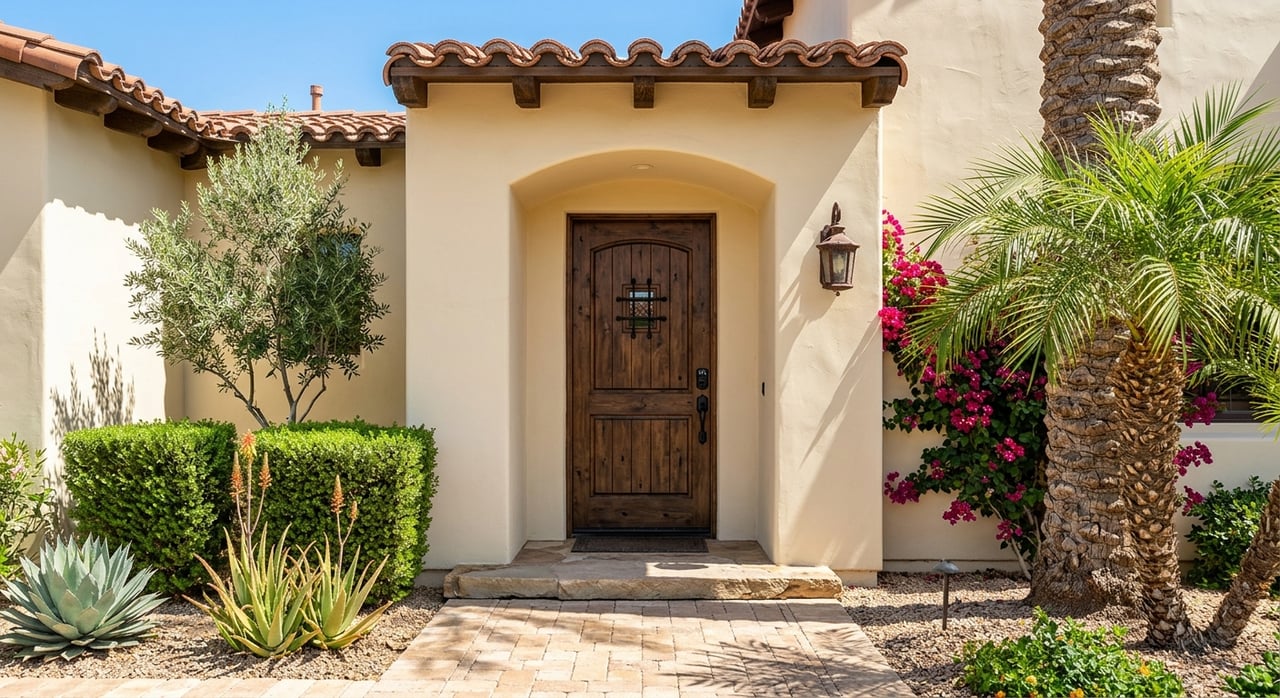
How to Buy a La Quinta Home Remotely With Confidence
May 14, 2026
May 14, 2026
If you’re thinking about buying a home in La Quinta while living somewhere else, you’re not alone, and you’re not at a disadvantage if the process is handled well. Many parts of a California purchase can be managed by phone, email, secure document sharing, and electronic signatures, but remote buying still takes careful timing and local coordination. The good news is that with the right plan, you can move through each stage with confidence and avoid last-minute surprises. Let’s dive in.
Buying from afar in La Quinta follows the same basic path as any other California purchase. You make an offer, open escrow, complete inspections and disclosures, sign closing documents, and wait for the final recording.
What changes is not the structure of the transaction, but how you manage it. When you are out of town, the process depends on strong communication, organized timelines, and a local team that can help coordinate details on the ground.
Before you write an offer, it helps to set a realistic budget that covers more than the purchase price. California guidance from the Department of Real Estate says buyers may need about 5% to 20% for a down payment plus roughly 3% to 7% for closing costs.
That said, closing cost estimates can vary. Consumer guidance also notes that closing costs often fall in the 2% to 5% range, so it is smart to treat these numbers as planning ranges rather than fixed quotes.
Your monthly payment is only part of the picture. You should also account for HOA dues, special taxes, and assessments if they apply, since those items can affect affordability in a meaningful way.
In La Quinta, many buyers are drawn to planned communities and common-interest developments. If you are buying in one of those settings, document review becomes especially important when you are purchasing from a distance.
California’s Department of Real Estate says that if a property is in a new subdivision or common-interest development, a public report must be provided before you become obligated. That report can include key details about CC&Rs, HOA costs, assessments, and other material disclosures.
For a remote buyer, these documents matter because they help you understand the rules, ongoing costs, and ownership structure before closing. Reviewing them early can save you time and help you make a cleaner decision.
Once your offer is accepted, the sale moves into escrow. Escrow is the neutral third-party stage where funds and documents are held until the contract terms and conditions are satisfied.
In Southern California, the Department of Real Estate says escrow is most often handled by an independent escrow company. During this period, your lender, title company, escrow company, and the parties to the transaction all have a role in getting the file to closing.
For remote buyers, this is where strong transaction management really matters. Most updates, signatures, and document exchanges can usually be handled digitally, which helps keep things efficient even when you are not in La Quinta.
If you are not walking through the property every few days, your inspection period becomes even more important. Consumer guidance recommends ordering an independent home inspection as early as possible so there is still time for follow-up inspections if needed.
That timing matters because inspection findings can lead to renegotiation, repairs, or even cancellation if your contract includes an inspection contingency. In a remote purchase, early inspections also give you more time to review reports and ask questions without feeling rushed.
If you are financing the purchase, your lender will generally require an appraisal as well. That is a separate step from the home inspection and is used to support the lender’s valuation of the property.
One of the most common questions remote buyers ask is whether they can complete everything without coming to town. In many cases, much of the transaction can be handled electronically or by mail, but California notary law still creates an important limit.
The California Secretary of State says a signer must physically appear before the notary for a notarial act. The state also says remote online notarization is not yet broadly available under current law.
In practical terms, that means you should expect at least one in-person notary appointment somewhere during the process. Even if the rest of your file moves smoothly through email and secure digital signatures, notarized documents still require personal appearance.
Right before closing, you should plan for a final walk-through. Consumer guidance says buyers should do this before signing and should avoid signing if the documents are different from what they expected.
This is an important checkpoint for remote buyers because it confirms the property’s condition and helps you verify that agreed-upon items remain in place. If repairs were negotiated, this is also a time to confirm completion.
You should also review your closing documents carefully. If something important changes about your loan, you may receive a new Closing Disclosure, and the law may require a new three-business-day review period.
After signing is complete, the closing company submits the mortgage and transfer documents for county recording. Recording is what makes the transfer part of the public record and marks the final step in getting the transaction across the finish line.
California consumer guidance also suggests signing up for County Recorder Alerts. That can help you stay informed about recorded activity tied to the property after closing.
For an out-of-area buyer, this stage is often less visible than the earlier steps. Still, it is an important part of a well-managed remote purchase because it confirms that the transaction has been formally completed.
Once the purchase is done, your next task is getting the home ready for use. La Quinta’s utility providers are straightforward, but it helps to map them out early so service starts are not delayed.
Here is the basic utility lineup for La Quinta:
Coachella Valley Water District provides domestic-service forms for starting or stopping water service. The district also offers online bill payment and customer service support for residents.
Imperial Irrigation District says residential electric service can be started by phone or online, usually by the next working day. SoCalGas offers start, transfer, and stop service options, and notes that a meter must be installed for service.
For trash and recycling, the City of La Quinta directs residents to Burrtec for residential collection, missed pickups, service questions, and bulky-item service. If you are buying a second home or planning a seasonal move, having these providers lined up ahead of closing can make your arrival much smoother.
If you want a clear picture of what to stay on top of, focus on these steps:
The biggest challenge in a remote La Quinta purchase is not the paperwork itself. It is making sure the moving parts stay aligned while you are not physically present.
That includes inspection timing, disclosure review, notary planning, utility setup, recording confirmation, and any final repair or punch-list follow-up. When those details are handled with care, remote buying can feel much more manageable and much less stressful.
That is where a concierge-style approach makes a real difference. If you are buying a primary home, second home, or lifestyle property in La Quinta from afar, having a local advisor who can help keep eyes on the process gives you clarity when it matters most.
If you’re planning a remote purchase in La Quinta and want a calm, detail-focused guide through the process, connect with Levi Knapp. You’ll get local insight, responsive communication, and concierge-level support from search to closing.
Stay up to date on the latest real estate trends.





Whether buying your first desert retreat or selling a signature property, Levi Knapp delivers a seamless and sophisticated experience every step of the way.