Where Mid-Century Design Shines In Palm Springs
July 2, 2026
July 2, 2026
Ever wonder why Palm Springs feels like the place where mid-century design truly comes alive? It is not just about a few famous homes or a retro look. In Palm Springs, architecture, climate, and lifestyle all work together in a way that makes mid-century modern feel natural, livable, and lasting. If you are drawn to Palm Springs mid-century homes or simply want to understand where the style shines brightest, this guide will walk you through the neighborhoods, design details, and ownership factors that matter most. Let’s dive in.
Palm Springs is widely recognized for its mid-century modern identity. Official city and tourism sources describe it as a place known around the world for iconic mid-century modern design, and that reputation is easy to see once you spend time here.
What makes Palm Springs different is that the style was shaped by the desert itself. Architects adapted modern design to intense sun, shifting temperatures, wind, and open terrain, creating what is often called desert modernism.
Desert modernism is more than a design trend. It is an approach built around clean lines, open layouts, and a strong connection between the home and the landscape.
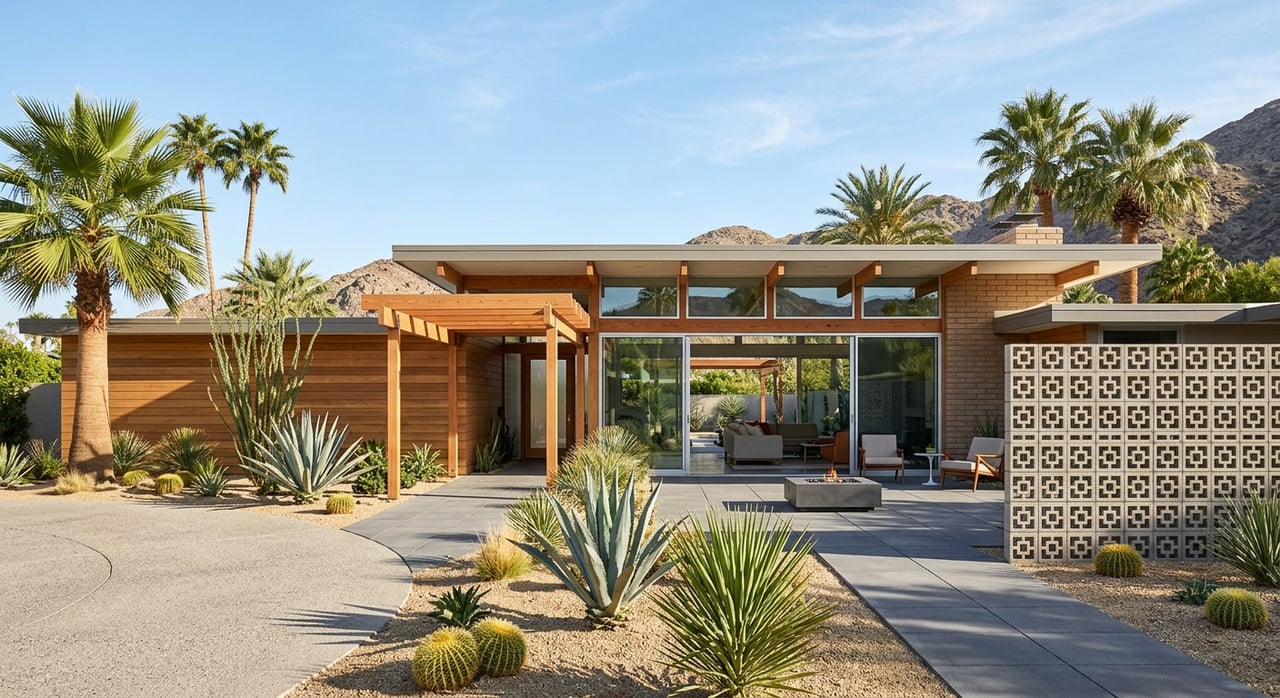
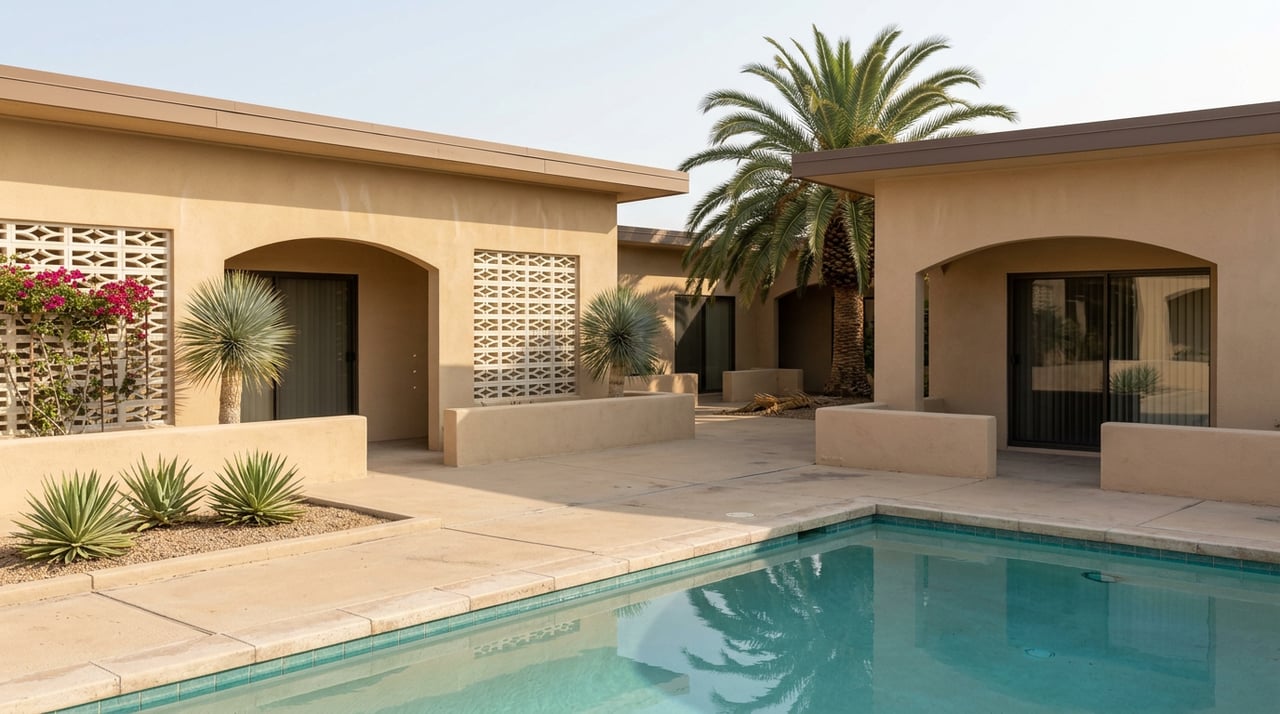
In Palm Springs, that often means flat or butterfly roofs, sliding glass doors, clerestory windows, deep overhangs, breeze blocks, and attached carports. These features help explain why the homes look striking while also feeling practical for desert living.
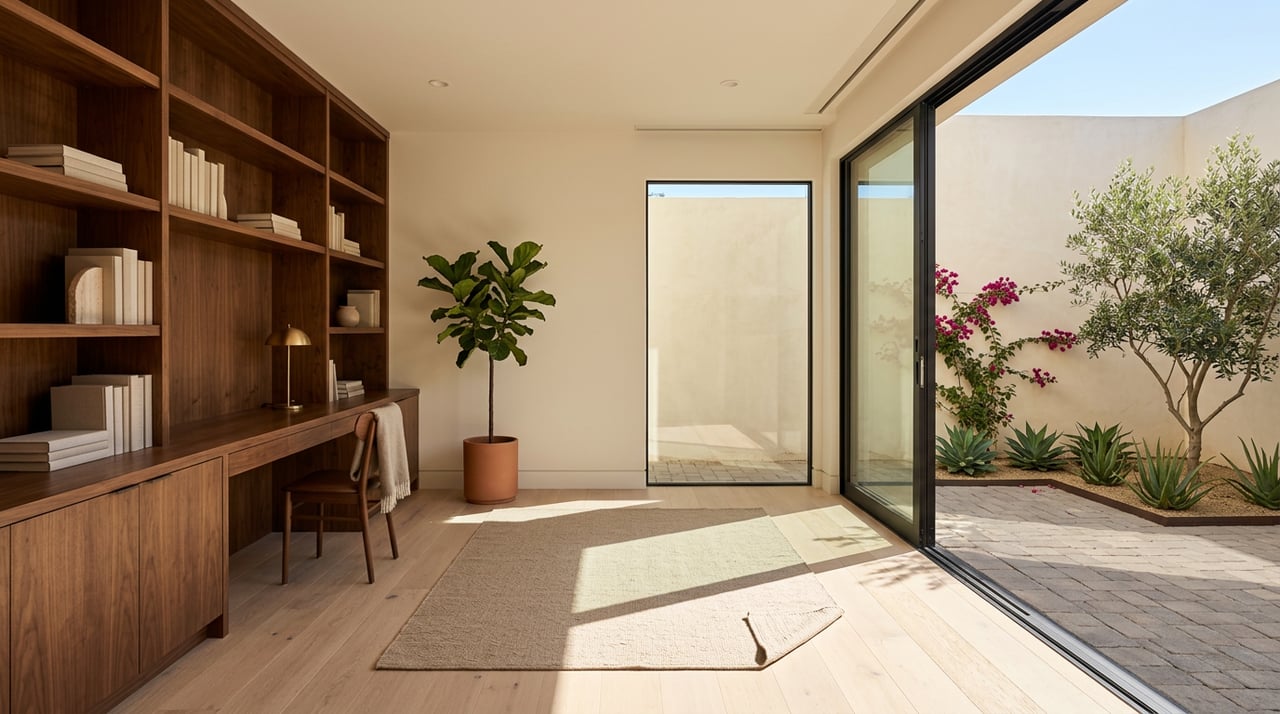
The indoor-outdoor flow is a major part of the appeal. Glass walls, patios, courtyards, and pool areas help blur the line between inside and outside, which fits the relaxed Palm Springs lifestyle so well.
If you want to see mid-century design at scale, Racquet Club Estates is one of the clearest examples in Palm Springs. Official self-guided architecture materials describe it as one of the largest concentrations of mid-century homes in the city.
This neighborhood is important because it brings together several strands of the Palm Springs story. You will find Alexander homes here, along with Steel Development houses by Donald Wexler and Meiselman homes, all contributing to a rich modernist streetscape.
Twin Palms is closely tied to the Alexander development legacy and remains one of the signature neighborhoods in the city’s mid-century story. It reflects how developers helped bring modern architecture to a broader group of buyers after World War II.
That matters because Palm Springs mid-century design was not limited to one-off custom estates. Developers and architects translated modern ideas into neighborhood-scale housing, making the style part of everyday residential life.
Vista Las Palmas is another standout neighborhood for buyers and design fans. It is often noted for its mix of classic mid-century homes and its collection of Swiss Miss houses.
These Swiss Miss homes are easy to spot by their A-frame entries. According to official city materials, 15 remain in Vista Las Palmas today, giving the neighborhood a distinct place within Palm Springs architecture.
One reason Palm Springs feels so rich architecturally is that its mid-century inventory is not all the same. The city includes tract neighborhoods, custom residences, experimental homes, and civic landmarks that all share a broader modern desert vocabulary.
On one side, you have neighborhoods built at scale by developers like the Alexanders. Official Palm Springs sources say the Alexander organization built more than 1,200 homes in the city, which helps explain just how deeply mid-century design shaped local housing.
On the other side, you have custom landmark homes like the Kaufmann Desert House, Edris Residence, Franz Alexander Residence, and Twin Palms. These properties show how major architects adapted modern design for dramatic sites and high-profile clients.
For many buyers, this variety is part of the appeal. You are not choosing from one fixed formula. You are exploring a spectrum of homes that range from approachable neighborhood residences to architectural showpieces.
Many Palm Springs mid-century homes have a horizontal look with low-slung forms and crisp geometry. That simple massing gives the homes a calm, grounded presence against the mountain backdrop.
This design language is one reason the architecture feels so timeless. It does not compete with the landscape. It frames it.
Palm Springs modernism is often defined by walls of glass and open interiors. These features help bring in light, connect living spaces to patios and pools, and keep the desert visible from inside the home.
If you are searching for a house that feels tied to outdoor living, this is where the style shines brightest. The architecture was built around the idea that the landscape is part of the home experience.
Some of the most recognizable mid-century features are also practical responses to desert conditions. Deep overhangs create shade, clerestory windows support light and privacy, and breeze blocks can help with airflow and sun control.
Butterfly roofs, shade screens, and attached carports also show up often in official Palm Springs examples. These details are a reminder that good design here has always been about both form and function.
Palm Springs mid-century design often uses straightforward materials in expressive ways. Steel, concrete block, corrugated metal, terrazzo, exposed aggregate, native stone, and desert landscaping all help create the look.
The style does not rely on heavy ornament. Instead, it uses texture, proportion, light, and landscape to do the work.
Palm Springs does not reserve modernism for residential streets alone. Civic buildings also reinforce the city’s design identity, which helps the style feel woven into daily life.
City Hall, the Architecture and Design Center, and the visitor center are all part of that broader story. When you move through Palm Springs, you see that mid-century design is not isolated to a few famous addresses. It is part of the city’s visual language.
If you are considering a mid-century home in Palm Springs, design is only part of the picture. Preservation status can shape what ownership looks like over time.
The City of Palm Springs uses historic preservation to protect buildings and districts that reflect the city’s cultural, social, economic, political, architectural, and archaeological history. The Historic Site Preservation Board helps identify and recommend historic sites and districts, and the citywide historic survey informs development review.
If a property is in a historic district or on the city’s Class 1 or Class 2 list, exterior changes can trigger review before a building permit is issued. The city notes that demolition and major alterations go to the Historic Site Preservation Board, while minor alterations go to the Historic Preservation Officer.
For buyers, this is an important practical point. If you value original character, that review process may feel worthwhile. If you want broad flexibility for exterior changes, a non-designated property may be easier to work with.
Palm Springs also offers a local incentive that many buyers and sellers should know about. The Mills Act can provide property tax relief for qualifying historic properties.
The city explains that these contracts run with the land, last 10 years with automatic yearly renewal, and come with maintenance and preservation obligations. It also notes that not every property in a historic district qualifies, and non-contributing district properties are not eligible for the tax reduction incentive.
Palm Springs mid-century appeal is not only about architecture. It is also about how the homes support a relaxed desert lifestyle built around light, shade, views, and outdoor living.
That connection helps explain why the style stays relevant. Buyers looking for a second home, seasonal retreat, or design-forward primary residence often want more than a beautiful facade. They want a home that feels connected to the setting and easy to enjoy.
Palm Springs also has an active design culture that keeps this legacy visible. Modernism Week takes place twice a year, in February and October, and the Palm Springs Art Museum’s Architecture and Design Center supports year-round architecture and design programming.
If you are shopping for a mid-century home in Palm Springs, it helps to narrow your priorities early. Some buyers want strong original character. Others want a home inspired by the style but with fewer preservation constraints.
It also helps to think neighborhood by neighborhood. Racquet Club Estates, Twin Palms, and Vista Las Palmas each tell a different part of the Palm Springs modern story, and the right fit often comes down to your design preferences, renovation goals, and how you plan to use the home.
When you look closely, Palm Springs stands apart because the architecture is not just preserved here. It is lived in, celebrated, and built into the city’s identity.
If you are exploring Palm Springs mid-century homes and want concierge-level guidance on neighborhoods, designation questions, or the right fit for your lifestyle, connect with Levi Knapp.
Stay up to date on the latest real estate trends.
Whether buying your first desert retreat or selling a signature property, Levi Knapp delivers a seamless and sophisticated experience every step of the way.